Most conversations about heirloom jewelry focus on what arrives after someone’s gone, locked in velvet boxes we open with grief and gratitude mixed. The language around inheritance assumes absence—estate planning, wills read in lawyer’s offices, the careful division of objects among people who wish they could have one more conversation instead. But there’s another transaction happening, less discussed but possibly more important: the jewelry we give while we can still see it worn.
This is active legacy construction, the decision to mark yourself with someone else’s existence while both of you are here to witness it. A grandmother who buys Theo & Grace’s Aurora Birthstone Huggies for herself with her granddaughter’s stone isn’t planning for eventual inheritance—she’s creating it in real time. She wears them to lunch dates and recitals, catching her reflection in restaurant windows and seeing her granddaughter’s October opal catching light, marking herself with someone who’s very much alive and learning and becoming. The legacy isn’t waiting to be transferred; it’s being actively lived and witnessed by both parties.
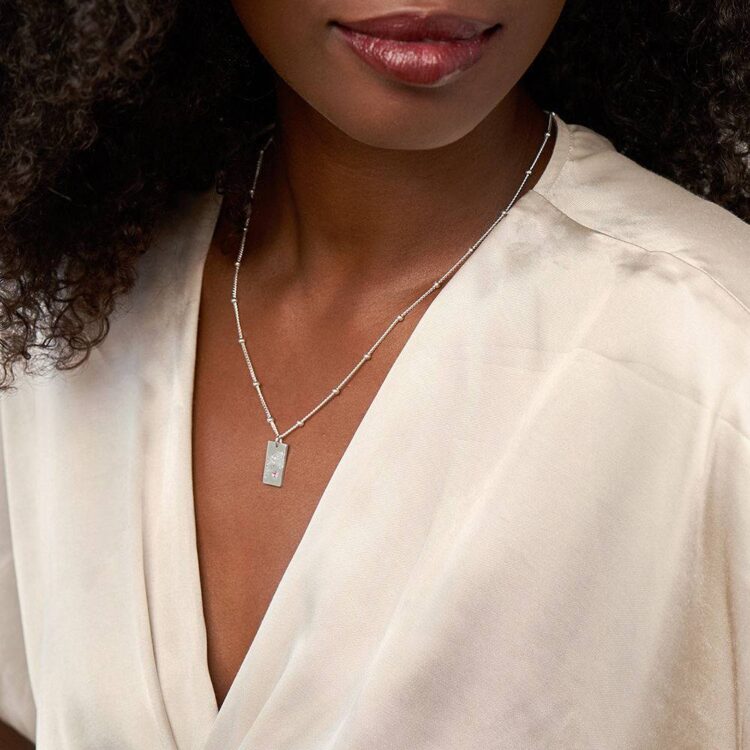
This approach requires a different kind of courage than traditional inheritance. When you give someone jewelry after you’re gone, you don’t have to see whether they actually wear it, whether it fits their style, whether it means to them what you hoped it would. But when mothers and daughters exchange Theo & Grace’s Blossom Birth Flower and Stone Necklace while both are alive, each wearing the other’s bloom, there’s immediate accountability. You see whether your gesture landed, whether the meaning translated, whether the person you’re honoring actually wants to carry your symbol against their skin. This vulnerability makes the exchange more powerful, not less.
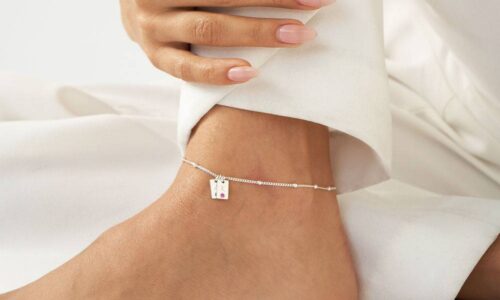
The Initial Birthstone Tag Anklet operates in this same space of living legacy, particularly between sisters or friends. The ankle is a less formal space than the neck or wrist, suggesting that the relationships that matter most aren’t always the ones society has named and formalized. When you give your sister an anklet with your initial, you’re not waiting until you’re gone to be remembered—you’re asking to be carried now, while you can still see how it moves when she walks, while you can still catch glimpses of it during family gatherings or video calls. The gift becomes proof of witness: I saw you, I’m still seeing you, I’m making permanent what could be temporary if we don’t pay attention.
There’s something almost defiant about this refusal to save meaning for later, to hoard significance until it’s too late to share. The Lorelai Rectangle Stud Earrings might mark a daughter’s graduation or new job, given not after achievement but during it. A parent’s way of saying I believe you’ll remember this moment as important someday, so let’s mark it now, together, while we can both participate in the creation of memory rather than one of us reconstructing it alone later.
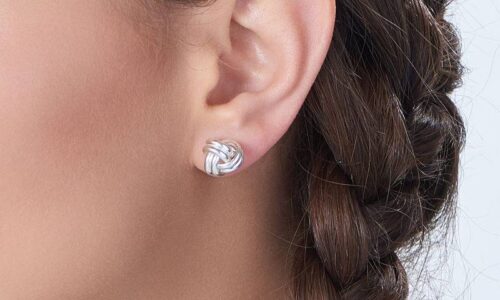
The Love Knot Earrings function as promise rather than commemoration, worn while the relationship is still being built, still being complicated and negotiated and chosen daily. This is perhaps the most honest form of inheritance—acknowledging that connection isn’t something that only matters after someone dies, but something that requires active maintenance and recognition while everyone’s still here. The knot represents ongoing entanglement, not past tense relationship.
What makes this approach revolutionary isn’t the jewelry itself but the timing. Traditional inheritance operates on scarcity—there’s only so much to go around, so we wait until someone’s gone to divide it up. But inheritance before death operates on abundance, on the recognition that meaning can be created and shared and multiplied while everyone’s still alive to participate in it. When you buy yourself Aurora Birthstone Huggies with your daughter’s stone, you’re not taking away from her eventual inheritance—you’re adding to the shared story you’re building together.
This is inheritance as verb instead of noun, legacy as active practice rather than passive reception. It’s the grandmother who wears her granddaughter’s birthstone to the granddaughter’s dance recital, creating a memory that the granddaughter will carry forward: the image of her grandmother in the audience with October opals catching stage lights. It’s the mother who gives her daughter a Blossom Birth Flower and Stone Necklace on a random Tuesday, not waiting for a birthday or graduation, just marking the ordinary miracle of relationship that continues day after ordinary day.
The radical proposition here is that we don’t have to wait for death to honor people, that we can create meaning and memory and connection right now, in the middle of life’s regular chaos, with small silver objects we choose together and wear while both parties can still see them catching light. This isn’t about replacing traditional inheritance—it’s about supplementing it with something more immediate, more vulnerable, more alive.