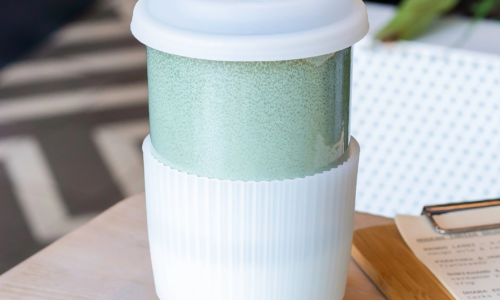

There is a very specific type of person who brings their own mug to cafés, co-working spaces, dog parks, airports, and random park benches. They are the ceramic nomads. They roam the city with a handmade mug in hand like some sort of caffeinated urban druid. And honestly? I respect it.
Los Angeles is the capital of ceramic nomads. You’ll see them in Silver Lake, sipping a cortado out of a hand-thrown cup with a silicone lid, typing screenplays that will never see daylight but look extremely aesthetic in the moment. You’ll see them in Highland Park, talking about mutual aid initiatives and composting while holding a Nova Ceramics travel mug that makes everything they say sound 20% more credible. You’ll see them in Santa Monica, pretending the coastal breeze is “Europe-coded” while doing emails outdoors. It’s a whole demographic.
Here’s what’s fascinating: five years ago, reusable cups were just metal thermoses you got for free at tech conferences. No one cared. Then the pandemic happened, people discovered hobbies, sourdough, ceramics, and suddenly we were all like, “I need a travel mug that expresses my soul.” Now there’s a subculture of people who genuinely feel weird drinking from paper cups because it feels like regression. Once you go ceramic, paper tastes like disappointment.
So what is this phenomenon? Simple: modern creative nomad culture plus sustainability plus aesthetics. People work from everywhere now. Their desk is a moving target. Laptop + headphones + Wi-Fi + ceramic mug = mobile office. It’s basically the new work uniform. And ceramic travel mugs are perfect for that because they’re tactile and grown-up without being tech-bro stainless steel energy.
Then there’s the sustainability angle. People like the idea of reducing waste, but they like the idea of looking cool while doing it even more. If we’re going to save the planet, we’re going to do it tastefully. And nothing says “I buy organic strawberries and emotionally spiral about microplastics” like a hand-thrown travel mug.
But let’s talk practicality because people always ask: “Isn’t ceramic too fragile?” No, Susan. Ceramic mugs are not Fabergé eggs. They’re stoneware fired at over 2200°F. That’s hotter than half the takes on Twitter. They can handle your backpack. They can handle your center console. They can handle you panic braking on the 405 because someone thought exit lanes were optional. And if you have a silicone sleeve and lid like Nova Ceramics uses, you’re basically unstoppable.
And here’s the cultural shift no one talks about: cafés are starting to love ceramic nomads. Why? Because paper cups cost money, and composting infrastructure is a nightmare. When someone hands over a ceramic travel mug, baristas get to feel like they’re participating in sustainable civilization instead of fueling the landfill economy. Some cafés in Europe even offer discounts for reusable cups, because Europeans are always quietly ahead of us while complaining about our air conditioning.
You also start to notice something else once you become a ceramic nomad: strangers talk to you. People notice the mug. They ask where it’s from. It becomes a conversation starter for introverts who don’t want to make eye contact but will happily talk about glaze chemistry for ten minutes. It’s like carrying a small gallery piece instead of a cup.
Meanwhile the functional benefits are underrated: ceramic doesn’t cook your drink or kill aroma like metal does. Tea tastes like tea. Coffee tastes like coffee. Hot chocolate tastes like nostalgia and seasonal depression recovery. And it stays warm long enough for you to get through three emails and one emotional spiral about entering your thirties. Perfect.
So yes, ceramic nomad culture is a thing. It’s the collision of aesthetics, sustainability, sensory pleasure, and the realization that life is better when your objects have soul. The world is stressful enough. The economy is weird. Dating apps are feral. At the very least, you deserve a mug that makes you feel something—preferably joy.
And if dragging a handmade ceramic travel mug across the city makes your workday feel 2% more romantic and 10% less corporate, then honestly, that’s worth it. We’re not here to survive—we’re here to have a vibe.