
Walk into any makeup store and you’re presented with dozens of lipstick bullets in fixed shades, each one supposedly perfect for someone, none of them quite right for you. You buy the one that’s closest, wear it twice, decide it’s slightly too cool or too dark or too something, and it joins the graveyard of almost-perfect lipsticks in your drawer. This cycle repeats itself until you own thirty lipsticks and still don’t have the exact shade you want for any given day.
The entire system is designed to keep you buying. Fixed shades mean that when your skin tone changes with the seasons, when trends shift from berry to nude, when you just want something a little different, you need to purchase another complete product. A professional makeup artist doesn’t work this way. They don’t carry 400 lipstick bullets to set. They carry palettes and mix custom shades for every client, every time, adjusting for skin tone, lighting, outfit, and occasion.
Here’s what the beauty industry doesn’t want you to know: custom blending isn’t actually complicated. You don’t need a degree in color theory or a professional kit. You just need to understand a few basic principles and have the right tools to work with. The reason most people never learn this is because there’s no profit in teaching customers to create exactly what they want from eight shades instead of buying thirty pre-mixed products they’ll mostly never use.
Color works in undertones and depths. Undertone is whether a color leans warm (peachy, golden, coral) or cool (pink, mauve, blue-based). Depth is simply how light or dark it is. Every lipstick color is a combination of these two factors. When a lipstick looks wrong on you, it’s usually because one of these factors is off. Maybe the depth is right but the undertone is too cool. Maybe the undertone is perfect but it’s too dark for daytime.
With a strategic palette—not random trendy colors, but a carefully selected range of undertones and depths—you can adjust either factor instantly. Your brown lipstick is slightly too cool? Mix it with a warm coral shade. Your red is too blue-toned? Warm it up by blending in an orange-based shade. Your perfect nude from summer now looks washed out in winter? Deepen it with a touch of mauve.
This is where a lip liner becomes something more than just a tool to prevent feathering. It’s your mixing medium and color adjustor. You can use it to deepen the edges of any shade for dimension, warm up or cool down undertones, or create an entirely new color by filling your whole lip with the liner and then layering cream color on top. The combinations become literally endless.
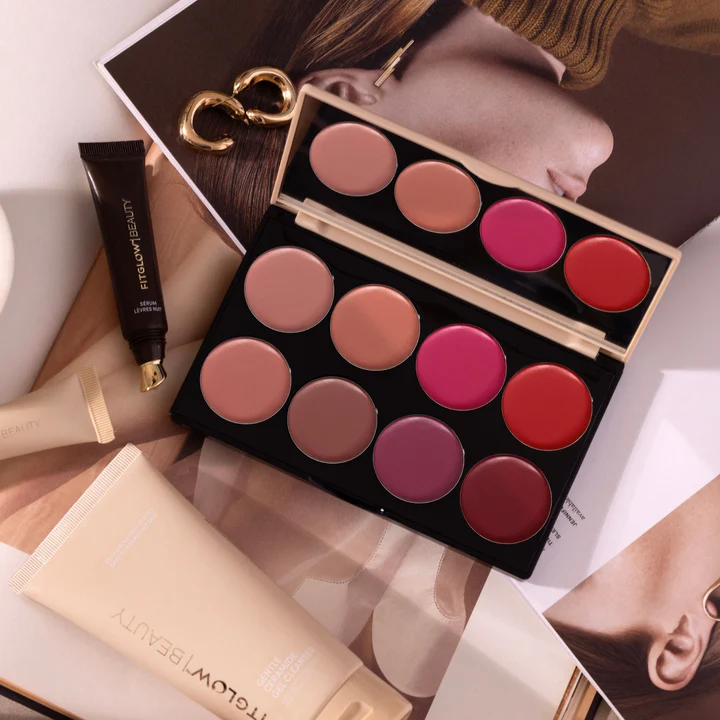
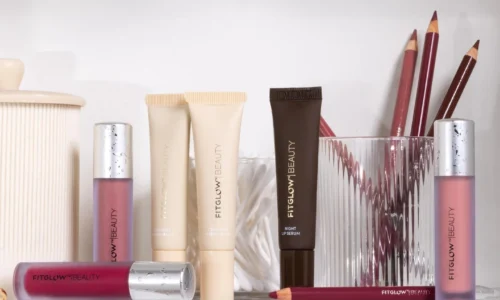
The practical reality is that eight well-chosen shades give you more versatility than fifty random lipsticks. Fitglow Beauty’s Lip Colour Cream Palette approaches this strategically, offering shades that can be layered, blended, or mixed to create hundreds of variations. Their Vegan Lip Liner works not just as a barrier against feathering but as a tool for customizing and adjusting any shade you create.
The technique itself is simple. You can mix colors directly on your lips by layering them, blend them on the back of your hand before applying, or even scrape a bit of each shade into a small container to create a custom color you use repeatedly. None of this requires professional training. It just requires permission to experiment and the understanding that mixing your own colors isn’t some advanced technique reserved for experts—it’s actually the smarter, more efficient way to approach lip color.
Your skin tone changed from winter to summer? You’re not stuck with products that no longer work—you just adjust your mixing ratios. That expensive lipstick you bought that’s almost perfect but not quite? You can recreate it exactly by mixing two shades and never waste money on close-but-not-quite colors again.
The beauty industry has deliberately kept consumers dependent on pre-mixed shades because it’s more profitable. Every time trends change, every time your skin tone shifts, every time you want something slightly different, they want you to buy a new product. But once you understand how to manipulate undertone and depth, you’re free from that cycle. You become your own colorist, mixing exactly what you need for your skin tone, your mood, your outfit, and your lighting.
This isn’t about being anti-consumerism or rejecting ready-made products entirely. It’s about transferring professional knowledge to regular people who’ve been convinced that custom blending is too advanced for them, too complicated, too specialized. It’s not. It’s just color theory, and it’s surprisingly simple once someone actually explains it instead of keeping it behind the curtain of professional mystique. The palette approach doesn’t limit you—it liberates you from the tyranny of fixed shades that were never quite right in the first place.
4 comments on “The Color Theory No One Teaches: Why Custom Blending Isn’t Just for Professionals”