
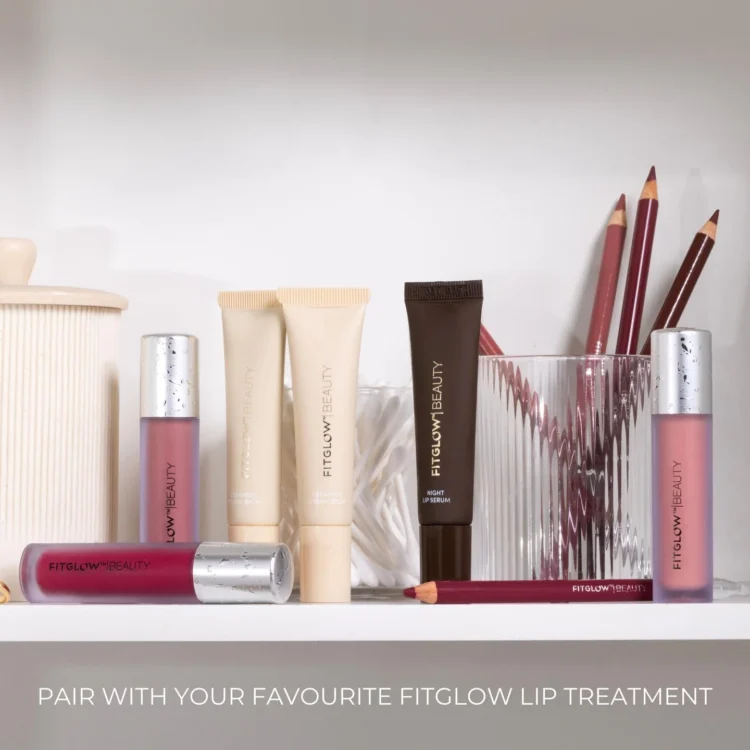
Having sensitive or rosacea-prone skin is typically framed as a limitation, a list of things you can’t use and ingredients you must avoid. Walk into any beauty store with reactive skin and you’re directed to the “gentle” section, where products promise not to hurt you but rarely promise to actually work well. It’s a consolation prize category, treating sensitive skin as something to work around rather than something that might teach you anything valuable.
But here’s what actually happens when you have skin that punishes you immediately for bad choices: you become an expert in ingredients, formulations, and what actually works versus what just creates the illusion of working. You read ingredient lists like a scholar because you have to. You understand your skin’s patterns and triggers because ignoring them has immediate visible consequences. You know which ingredients deliver real results versus which ones just create irritation that temporarily masquerades as “activity.”
Someone with normal skin might never question why their foaming cleanser makes their face feel tight and squeaky. They’ve been told that tight, squeaky feeling means their skin is “really clean,” and since their skin doesn’t immediately break out in red patches, they accept this explanation. Someone with rosacea tries that same cleanser once and learns instantly that tight, squeaky skin is actually damaged skin. That stripped feeling isn’t cleanliness—it’s barrier disruption.
This forced education creates a completely different relationship with products. You learn that cleansing can and should include barrier repair happening in real-time through ingredients like ceramides, which counteract the disruption that any cleansing process inherently causes. You discover that foam and lather have nothing to do with cleaning efficacy and everything to do with consumer perception. Sulfate-free cleansers can feel like they’re not working because they don’t foam aggressively, but they’re actually cleaning more effectively because they’re not stripping away the protective oils your skin needs.
Fitglow Beauty built their entire line around this principle, starting with formulas designed for rosacea-prone skin first, then scaling that careful approach across all their products. Their Gentle Ceramide Gel Cleanser removes makeup and debris while including ceramides that repair the barrier as you cleanse—something someone with sensitive skin would demand, but anyone’s skin would benefit from.
The same pattern plays out with setting powder. Most people never think about what’s actually in it or why it might cause irritation. But someone with sensitive skin has probably gone through six different powders trying to find one that doesn’t make their cheeks red and inflamed. Through this process, they learn that talc is a common irritant, that bismuth oxychloride creates that pearlescent finish but causes reactions in many people, and that synthetic dyes serve no functional purpose except making the powder look prettier in the compact.
This detective work reveals something unexpected: setting powder can actually add moisture through ingredients like hyaluronic acid instead of just mattifying through absorption. The Bamboo Hyaluronic Loose Setting Powder demonstrates this—it sets makeup while adding hydration, which seems contradictory until you understand that “setting” and “drying out” aren’t the same thing. Someone with normal skin might never discover this because their skin tolerates the drying effect without immediate complaint.
The irony is that people with normal skin would benefit enormously from applying the same critical thinking that sensitive skin demands. Just because your skin doesn’t immediately react to harsh sulfates, drying alcohols, or irritating fragrances doesn’t mean those ingredients are good for you. The damage accumulates invisibly over years—barrier disruption that doesn’t show up as redness until you’re forty, dehydration that manifests as premature fine lines, sensitivity that develops gradually until suddenly you can’t use products you’ve used for decades.
Sensitive skin forces you to develop expertise early because the consequences of ignorance are immediate and visible. Normal skin lets you coast on tolerance until the cumulative damage catches up with you, at which point you have to learn everything that someone with sensitive skin already figured out twenty years earlier.
The advantage isn’t in having sensitive skin itself—it’s in the forced education that comes with it. It’s being unable to rely on marketing claims or brand reputation because your skin will immediately reveal whether a product works or just talks a good game. It’s developing the ability to read an ingredient list and predict how your skin will respond before you waste money on another product that promises gentleness but delivers irritation.
For people with sensitive skin who feel frustrated by their limitations, reframing this as expertise rather than restriction doesn’t make the daily challenges disappear. But it does acknowledge that the careful, research-intensive approach isn’t neurotic or overly complicated—it’s intelligent self-care based on genuine understanding. And for people with normal skin, borrowing this critical approach even though your skin doesn’t punish you for ignoring it might be the smartest beauty decision you make.

2 comments on “Sensitive Skin’s Secret Advantage: Why Reactive Skin Forces You to Become Smarter”