
Open any beauty magazine and the mascara ads promise the same thing: extreme volume, impossible length, lashes so dramatic they look false. The formulas deliver on this promise through synthetic polymers that coat lashes in rigid, plastic-like films, fibers that create the illusion of length, and strong solvents that strip away natural oils. Your lashes look incredible for six hours. Then you go to remove your makeup and watch three or four lashes come out with the cotton pad.
You’ve probably been told this is normal, that everyone loses lashes daily as part of the natural growth cycle. And while it’s true that lashes do shed naturally, those lashes you’re seeing on your makeup remover pad aren’t falling out because they’ve reached the end of their lifecycle. They’re breaking off because they’ve been repeatedly coated in formulas that make them dry, brittle, and fragile.
Think about what you’re actually doing when you use traditional mascara. You’re coating delicate hair strands in a formula designed to dry hard and stay put for twelve hours. The polymers create stiffness, which is how you get that lifted, curled effect, but stiffness in hair means fragility. Every time you blink, you’re creating micro-stress on hair that’s been essentially turned into tiny plastic rods. Over months and years, this cumulative damage shows up as lashes that are sparser, shorter, and less able to hold a curl than they were when you were twenty.
Then there’s the removal process. Waterproof mascaras—the ones that really last—require aggressive removal. You’re rubbing at delicate eye skin with oil-soaked cotton pads, pulling and tugging at lashes that are already stressed. Even non-waterproof formulas often cling stubbornly, requiring more mechanical force than is ideal for such a delicate area.
This creates an interesting question that the beauty industry never wants you to ask: are you willing to have less dramatic lashes today if it means having more actual lashes in five years?
Mascara built around lash health rather than maximum drama works on an entirely different principle. Plant waxes coat without creating brittleness. Bamboo extract conditions while adding subtle definition. The finish is more natural—you get darker, slightly longer lashes that look like enhanced versions of your own rather than falsie-adjacent drama. For some people, this is disappointing. We’ve been trained to expect mascara to transform our lashes into something dramatically different, and anything less feels like the product isn’t working.
But here’s what actually happens when you switch from high-drama formulas to conditioning ones: your lashes stop breaking. The lash line that seemed to be thinning gradually starts looking fuller again because you’re not losing lashes faster than they’re growing in. The lashes you do have become stronger and more flexible, which means they hold a natural curl better even without the rigid polymer coating. Over time—and this takes months, not days—you end up with lashes that actually look better bare than they used to look with traditional mascara on.
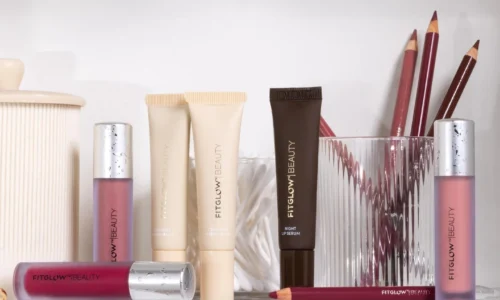
Fitglow Beauty’s Lash Care Mascara exemplifies this philosophy, using bamboo extract and plant waxes to coat lashes without the brittleness that synthetic polymers create. It prioritizes lash health over dramatic volume, which means accepting a more natural finish in exchange for lashes that strengthen rather than break down with daily use.
The trade-off is real though. You will not get spidery, clumpy drama. You will not get the kind of length that makes people ask if you’re wearing falsies. You will get definition, some darkening, a subtle lift, and lashes that are genuinely healthier. Whether that trade-off is worth it depends entirely on what you value more: immediate visual impact or long-term lash health.
There’s also the removal factor to consider. A gentle cleanser takes mascara off without aggressive rubbing. This means less mechanical damage to lashes that are already delicate, and less stress on the thin skin around your eyes that shows aging faster than anywhere else on your face. The entire system—application and removal—becomes less traumatic to the area.
This isn’t a judgment on women who choose drama over health. If you’re someone who loves the look of extreme lashes and you’re fine with the trade-off, that’s a perfectly valid choice. But it should be an informed choice rather than an unconscious one. Most people have never considered that their mascara might be actively damaging their lashes, or that the gradual thinning of their lash line might not be inevitable aging but rather the cumulative effect of daily product use.
The mascara rebellion isn’t about rejecting all traditional formulas or claiming moral superiority for choosing conditioning products. It’s about understanding what you’re actually trading when you choose drama over health, and deciding whether that trade-off aligns with what you actually want for your face in the long term.