We’ve all heard the stat that we spend a third of our lives sleeping, but what actually happens to your lips during those eight hours? While you’re unconscious, your body enters its deepest repair mode around 2am, when cell division peaks and growth hormones flood your system. Blood flow to the skin increases by up to 20%, creating a delivery highway for nutrients and repair molecules. Your lips, despite being one of the most exposed parts of your body during the day, are finally getting a break from talking, eating, drinking, licking, and weather exposure.
Here’s the thing though: most of us completely waste this biological opportunity. We brush our teeth, do our elaborate ten-step skincare routine, and crawl into bed with lips that have endured a full day of coffee stains, wind exposure, and unconscious biting without any recovery protocol whatsoever. Maybe we swipe on some lip balm if we remember, but that’s basically putting a Band-Aid on a burn victim.
The skin on your lips is fundamentally different from the rest of your face. It lacks oil glands entirely, which means it can’t self-moisturize the way your cheeks or forehead can. The stratum corneum—that protective outer layer of skin—is significantly thinner on your lips, making them uniquely vulnerable to moisture loss and environmental damage. And unlike the rest of your face, you can’t exactly avoid using them all day. Every time you talk, eat, drink, or purse your lips, you’re creating micro-movements that break down whatever protection you’ve managed to build up.
This is where nighttime intervention becomes genuinely strategic rather than just another beauty step. Your lips need exfoliation, but doing it during the day means you’re immediately exposing freshly buffed skin to wind, sun, your third iced coffee, and whatever you’re eating for lunch. Do it at night, and those newly revealed cells get eight uninterrupted hours to absorb treatment and repair themselves.
The catch is that not all exfoliation is created equal. Traditional lip scrubs use sugar or salt crystals, which sound natural and harmless until you realize they’re creating tiny tears in tissue that’s already compromised. What you actually want is something fine enough to buff away dead cells without damaging the healthy ones underneath. Think coffee grounds and beetroot powder—ingredients that can gently lift accumulated debris without the aggressive abrasiveness that makes your lips feel worse the next day.
But exfoliation alone is only half the equation, like demolishing a damaged building without having materials ready to construct the new one. This is where the concept of barrier repair becomes critical. Your lips have a moisture barrier made up of lipid molecules called ceramides, and when your lips are chronically dry or showing fine lines, it’s often a sign of ceramide depletion. You can apply all the balm in the world, but if the underlying structure is compromised, you’re just putting a temporary seal on a leaky foundation.
Plant ceramides are biomimetic, meaning they’re molecularly similar to what your body produces naturally. When you apply them to freshly exfoliated lips at night, you’re essentially giving your skin the building blocks it needs to reconstruct its protective barrier while you sleep. Add vegetable collagen to the mix—which provides amino acids that your body uses to synthesize its own collagen—and you’re supporting both the barrier and the structural integrity of the tissue itself.
The timing matters more than most people realize. During sleep, your skin’s permeability increases, which means active ingredients can penetrate more deeply than they would during the day when your body is in defensive mode. Your lips aren’t being disturbed every twenty minutes by talking, drinking water, or absentmindedly licking them. The treatment just sits there, working, for eight solid hours.
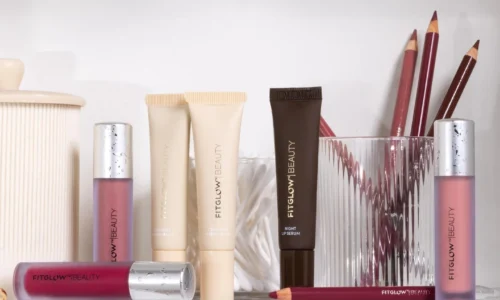
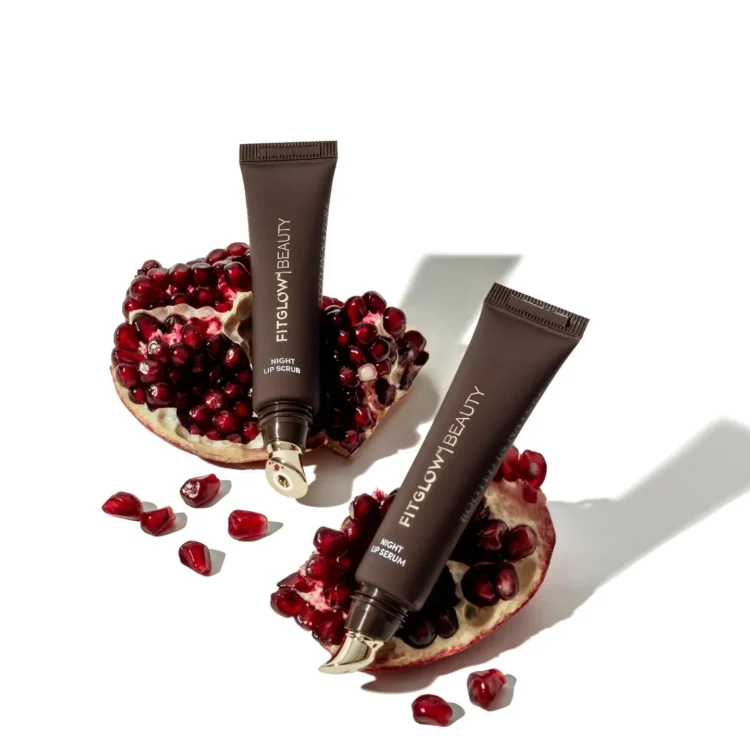
Products like Fitglow Beauty’s Healthy Lip Duo take advantage of this biological window by pairing gentle exfoliation with intensive overnight treatment. The scrub component uses coffee bean and beetroot to lift away stubborn dead cells that make lipstick look patchy, while the serum follows with plant ceramides and vegetable collagen that can actually penetrate undisturbed while you sleep.
By morning, lips that felt like sandpaper the night before have this plump, smooth quality that no amount of daytime balm ever achieves. The fine lines that appeared around the edges soften. The flaking that made lipstick look patchy disappears. It’s not magic—it’s just biology being given the conditions it needs to do what it’s already programmed to do.
The concept isn’t about adding another complicated step to an already crowded routine. It’s about recognizing that your lips are working the night shift whether you support them or not. They’re repairing, regenerating, and rebuilding while you sleep. The only question is whether you’re giving them the materials they need to do that work effectively, or whether you’re sending them into the repair shop empty-handed and hoping for the best. Strategic nighttime lip care transforms the ritual from hopeful gesture into biological intervention, and the difference shows up in your mirror every single morning.