Fashion editorials obsess over styling and layering, showing necklaces stacked just so, rings arranged across fingers in supposedly spontaneous arrangements. But underneath all that aesthetic curation is a more interesting question that rarely gets examined: why certain memories belong in certain places on our bodies. The neck, closest to voice and breath. The ears, where we hear the world. The ankle, weight-bearing and hidden. These aren’t arbitrary choices—they’re intuitive cartography, mapping relationships onto physical spaces that match their emotional function.
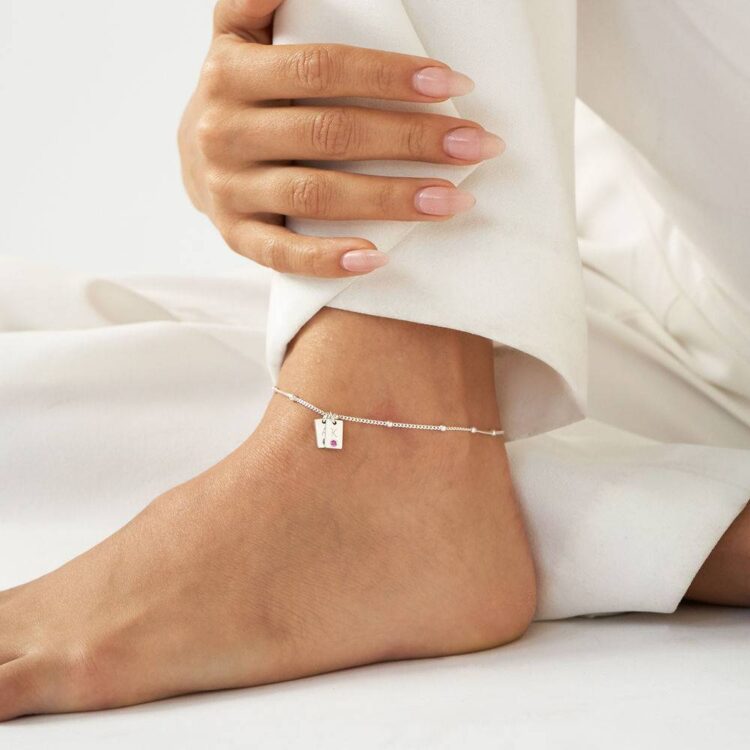
Consider the ankle first, that joint that carries us forward, flexing with every step, bearing the full weight of the body in motion. Theo & Grace’s Initial Birthstone Tag Anklet chooses this placement deliberately. This isn’t jewelry you forget you’re wearing—the ankle has too many nerve endings, too much constant movement. You feel it with every step, which means you think about what it represents with every step. The ankle becomes a foundation piece rather than decoration, appropriate for the relationships that literally carry us through life, that support our weight even when we’re not consciously aware of them.
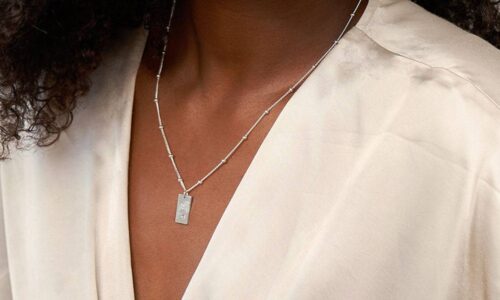
Compare this to how the Blossom Birth Flower and Stone Necklace rests at the throat, against pulse and swallow, breath moving it slightly with each inhale. This is a different kind of constant awareness, more internal, more connected to the body’s basic functions of staying alive. The throat holds our voice, the words we speak about the people we love, and also our breath, the unconscious rhythm that keeps us here. Placing someone’s birth flower at this particular intersection isn’t accidental—it’s about making connection fundamental rather than decorative, as essential as breathing.
The ears present yet another geography entirely. Theo & Grace’s Aurora Birthstone Huggies sit where we process sound and balance, where the inner ear does the invisible work of keeping us oriented in space. These aren’t just pretty frames for the face—they occupy the site where we hear other people’s voices, where we maintain equilibrium, where internal and external worlds meet. A birthstone huggie worn at the ear suggests that the person it represents affects how you hear the world, how you maintain balance, how you orient yourself in relation to everything else.
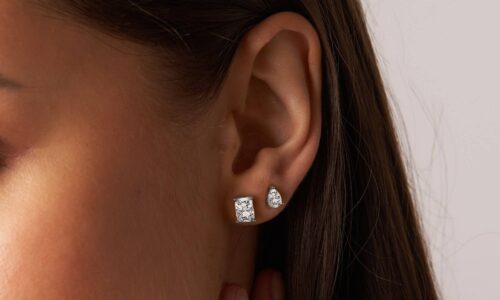
The Lorelai Rectangle Stud Earrings occupy the same space but differently. Studs press into the lobe rather than wrapping around it, a more insistent presence, like the difference between holding someone’s hand and gripping it. The pressure is constant, direct, unavoidable. This makes studs appropriate for relationships characterized by their steadiness rather than their drama, the people who show up consistently, pressing gently but constantly against your awareness.
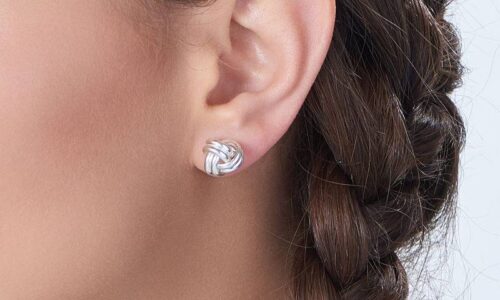
The Love Knot Earrings turn the ear into a site of complexity, that tangled symbol dangling where we hear language and music and the voices of people we love. The placement suggests that what we carry about connection isn’t simple, can’t be reduced to clean lines or easy categories. Every time you turn your head and feel the knot move, you’re reminded that relationships are complicated tangles that can’t be undone without work, that bind us in ways both constraining and sustaining.
There’s an ancient practice here, even if we’ve forgotten its origins—this human impulse to mark the body’s key intersections with reminders of what makes life meaningful. Before written language, before photographs, before any technology for preserving memory, humans marked their bodies to remember. The specific geography mattered then and matters now, though we’ve learned to disguise it as fashion.
The ankle grounds us, connects us to earth and movement and the practical business of getting from one place to another while carrying who we love with us. The throat holds voice and breath and the vulnerability of exposure, appropriate for the relationships we speak about openly, that give us air. The ear processes how others sound to us, how we sound to ourselves, where internal and external meet and sometimes conflict.
These aren’t just pretty places to hang metal. They’re deliberate choices about where memory lives on the body, how physical placement creates psychological meaning. A mother might wear her child’s birthstone at her neck rather than her wrist because the neck is where vulnerability lives, where pulse can be seen, where a single piece of jewelry becomes impossible to ignore in any mirror. Friends might choose anklets instead of necklaces to mark their bond because ankles are working joints, practical and strong, appropriate for relationships built on mutual support rather than romantic gesture.
Understanding this geography changes how we think about jewelry entirely. It stops being about what matches an outfit and becomes about what matches an emotion, a relationship’s particular quality, the specific way another person has marked your life. The body becomes a map we consciously design, each piece of jewelry a landmark indicating what matters and why.