
Fidgeting gets treated like a character flaw. Like it’s a lack of discipline. Like if you were more focused, more “together,” more adult, you’d just sit still and stop tapping your foot like a cartoon villain. But the body doesn’t fidget because it’s trying to ruin your life. It fidgets because it’s trying to regulate.
That’s the part nobody says out loud: a lot of what we call “bad habits” are actually nervous-system strategies. Not elegant ones, maybe. Not the kind you’d put on a wellness poster. But strategies, nonetheless. The leg bounce, the pen click, the snack grab, the mindless scroll—those are often the body trying to discharge energy or self-soothe when it feels slightly on edge.
And if your day is one long sequence of tiny stressors—deadlines, messages, social pressure, noise, screens, decisions—then your nervous system is basically always carrying a little extra electricity. Fidgeting is one of the ways it tries to move that electricity somewhere else.
The problem isn’t the movement. The problem is what the movement is paired with.
Most modern fidgeting comes with shallow breathing. You’re moving, but you’re not releasing. Hands are busy, but the chest is tight. The breath stays high, quick, half-finished—so the body never gets the signal that things are safe. So the fidgeting continues. It becomes a loop: tension → movement → more tension.
That’s why telling someone to “just stop fidgeting” doesn’t work. It’s like telling someone to stop coughing without addressing the smoke in the room. You’re trying to control a symptom instead of supporting the system.
What works better is redirecting the fidget. Giving the body a healthier outlet—something tactile that still scratches the itch, but also brings awareness and breath into the mix. Because breath is the missing piece. Breath is the language the nervous system actually understands.
Longer exhales are one of the quickest ways to shift the body out of alert mode. It’s not magic, it’s biology: a slow exhale helps activate the parasympathetic nervous system—basically the part that tells the body, “we’re safe, we can stop bracing.” The issue is that nobody remembers to do slow exhales in the moments when fidgeting shows up. You don’t think, Now would be a great time to do a breathing technique. You just start scrolling.
This is where Komuso Design’s approach is smart—because it doesn’t rely on perfect willpower. Their whole concept is: make breath regulation accessible in real moments. Not just in theory. Not just when you’re calm enough to sit on the floor and “practice.”
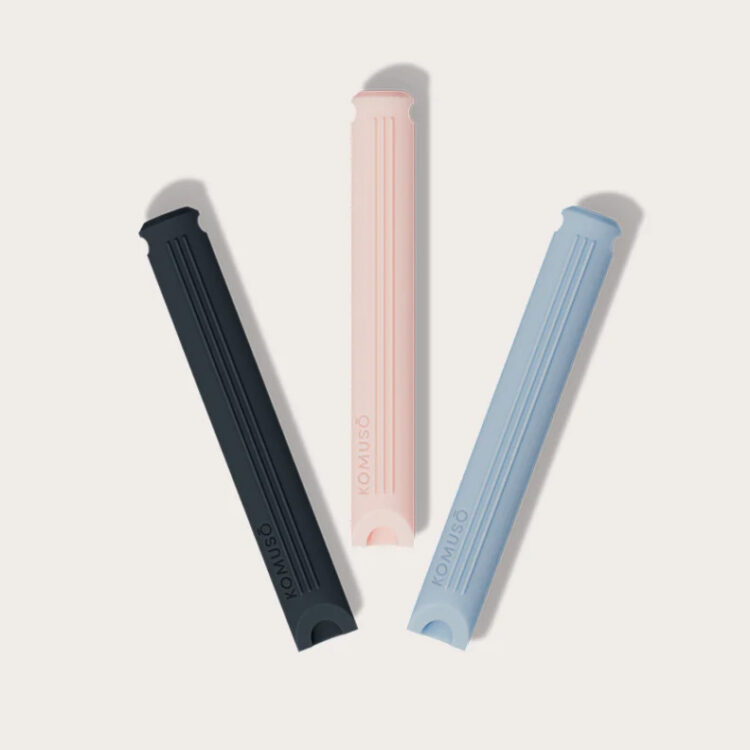
The Flex Fidget Breather is built specifically for that restless moment. It’s silicone, sensory, designed to be squeezed, rubbed, held—so it meets the fidget instinct instead of fighting it. But it’s not just a fidget toy. It also gives you a way to breathe through it, which is the part that changes everything. The tactile engagement keeps your hands busy (which your nervous system clearly wants), while the guided breathing component encourages a longer exhale (which your nervous system desperately needs).
So instead of fidgeting mindlessly while your breath stays shallow, you’re fidgeting with a purpose—your hands are moving, and your breath is slowing down. That’s regulation. That’s the body getting the message.
And here’s the thing people don’t talk about enough: not everyone “calms down” through stillness. Some people regulate through movement. That’s why the whole “just sit quietly and meditate” advice can feel insulting. Like telling someone with a racing mind to simply stop thinking. A lot of people focus better when their hands are doing something small and repetitive. It’s not immaturity—it’s sensory input that grounds them.
The Flex Fidget Breather is basically saying: fine. Let the hands move. But let’s make that movement actually helpful.
That’s also where Komuso Design’s Shifts come in, depending on the moment. The Classic Shift and Active Shift are breath-guiding necklaces designed for longer, steadier exhales—often around that 8–10 second exhale range that’s commonly used in calming breath practices. They’re less about fidgeting and more about resetting the body through intentional exhale. If your “fidget” is more like internal spiraling—overthinking, bracing, shallow breathing—then taking a few slow exhales through the Shift can interrupt that loop. If you’re more physically restless, the Flex meets you there.
None of this is about becoming some perfectly calm person who never bounces their leg again. Honestly, that sounds boring. It’s about understanding what your body is trying to do and giving it a better option.
So if you fidget, you’re not failing. You’re coping. The upgrade is awareness—pairing that coping mechanism with breath, so your nervous system actually gets what it’s asking for.
Fidgeting isn’t the problem. Unconscious fidgeting is.