Nobody wakes up in the morning and decides to stop breathing properly. It just… happens. Somewhere between the first notification of the day, the mental to-do list forming before you’ve even stood up, and the reflex to check your phone before your feet hit the floor, something shifts. Your breath gets shorter. Higher. Shallower. And then it stays there.
The strange part is that most of us don’t notice. We move through the day holding tension in places we never consciously chose: jaw clenched, shoulders lifted, breath suspended mid-chest. Not because something is wrong in that moment — but because our nervous systems have learned to stay on alert by default. Constant readiness becomes the baseline.
Breath-holding isn’t dramatic. It’s subtle. It shows up when you’re answering emails, driving in traffic, waiting for someone to reply, scrolling without thinking. You’re not anxious in a way you’d label as anxiety — you’re just… braced. And over time, that quiet bracing becomes exhausting.
We talk a lot about stress as if it’s a big, visible thing. Burnout. Overwhelm. Panic. But the truth is, stress lives in the small moments. The moments where your body is preparing for something that never actually arrives. Breath-holding is one of the clearest signals of that state — and one of the easiest to miss.
What’s interesting is that breathing exercises themselves aren’t the issue. Most people already know they “should” take deeper breaths. The problem is that modern life doesn’t create natural openings for it. Nobody pauses a meeting to inhale slowly. Nobody remembers a breathing technique when they’re rushing between tasks. Awareness alone isn’t enough if nothing interrupts the pattern.
That’s where the idea of micro-resets comes in. Not long meditations. Not structured practices. Just brief moments that remind the body it’s safe enough to exhale fully. Safe enough to let the shoulders drop. Safe enough to stop hovering in that half-breath state.
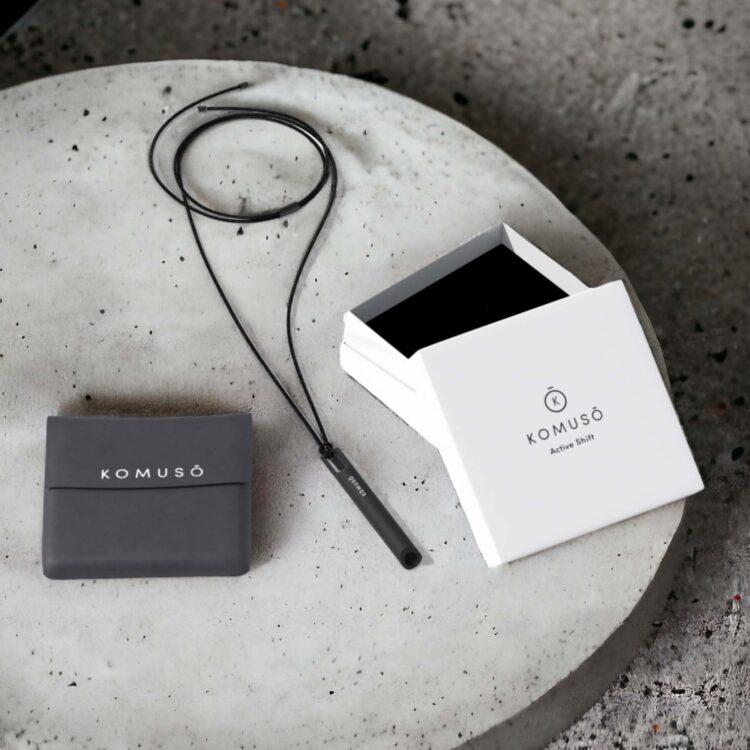
Objects can play a role here — not as solutions, but as cues. A physical reminder that lives with you instead of demanding your attention. Something that doesn’t buzz or track or gamify calm, but simply invites it. That’s why pieces like the Active Shift by Komuso Designs work best when they’re not treated as tools you “use,” but as something you return to without thinking. A prompt, not a project.
The real shift happens when breathing stops being another task to complete and becomes something integrated into movement. Walking. Waiting. Standing in line. These are the moments where breath naturally wants to reset — if we give it permission.
We don’t need more instructions on how to breathe. We need more space to remember that we already know how.